
Short answer: In cooling mode, a heat pump and a central air conditioner work the same way and feel the same in your home. The difference is winter. A heat pump reverses to heat your house with electricity, while a standard AC needs a separate furnace. For many East Valley homes with mild winters, a heat pump is a strong fit. The best choice depends on whether you have natural gas, the condition of your existing furnace, and your electrical panel.
This question comes up constantly when a system is being replaced, and more every year as heat pumps become what new equipment and many rebate programs are built around. The good news is that in Arizona the decision is simpler than it is in a cold climate. Here is how the two systems compare, where each one wins, and what to check before you commit to a heat pump installation.

How a Heat Pump Works
A heat pump is an air conditioner with one extra part: a reversing valve. In summer it pulls heat from inside the house and dumps it outside, exactly like any AC. In winter the valve flips the refrigerant flow, and the system pulls heat from the outdoor air and moves it inside. Even air that feels cold contains heat energy a heat pump can collect, which is why they work so well in a place where a cold Mesa morning is still mild by most of the country’s standards.
Because it moves heat instead of generating it by burning fuel or running a heating element, a heat pump can deliver more heat energy than the electricity it consumes. That is the efficiency advantage people talk about, and it is strongest in mild weather, which describes most of our heating season.
How a Standard AC and Furnace Setup Works
A conventional split system pairs an outdoor air conditioner with an indoor furnace. The AC handles cooling. The furnace handles heating, usually by burning natural gas, or in some homes with electric resistance heat strips. If your home already has gas service and a furnace in decent shape, you can replace the AC alone and keep the furnace.
Heat Pump vs. AC: The Real Differences for East Valley Homes
Cooling performance
Identical in practice. A heat pump in cooling mode is an air conditioner. Sizing, airflow, ductwork and installation quality decide how well your home cools, not which label is on the outdoor unit. If someone tells you a heat pump cannot keep up with Arizona summers, that is outdated.
Heating in a mild winter
This is where the heat pump earns its keep. East Valley winters have cool nights and comfortable days, and hard freezes are rare and short. That is close to ideal operating territory for a heat pump. It rarely has to run in the deep cold that cuts into heat pump efficiency up north, and many units include backup heat strips for the handful of nights it needs help.
Gas availability
If your neighborhood has no natural gas, the comparison is between a heat pump and an AC with electric strip heat. Resistance heat is the least efficient way to warm a house, so a heat pump almost always wins that matchup. If you do have gas and a furnace that is not near the end of its life, keeping the furnace and replacing just the AC can be the lower upfront path. Some homeowners split the difference with a dual fuel setup, where a heat pump handles mild weather and the furnace takes over on the coldest nights.
One system instead of two
A heat pump heats and cools with a single outdoor unit and air handler. There is no gas line, no burner, no flue. That is simpler for a home being fully re-equipped, but for a home with a working furnace it means replacing something you might not have otherwise.
Runtime and wear
A heat pump’s outdoor unit runs in both seasons, so it accumulates more hours per year than an AC that rests all winter. In the desert the summer hours dominate anyway, so the difference is smaller than it sounds, but regular maintenance on a heat pump is worth keeping up with.
Mini Splits Are Heat Pumps Too
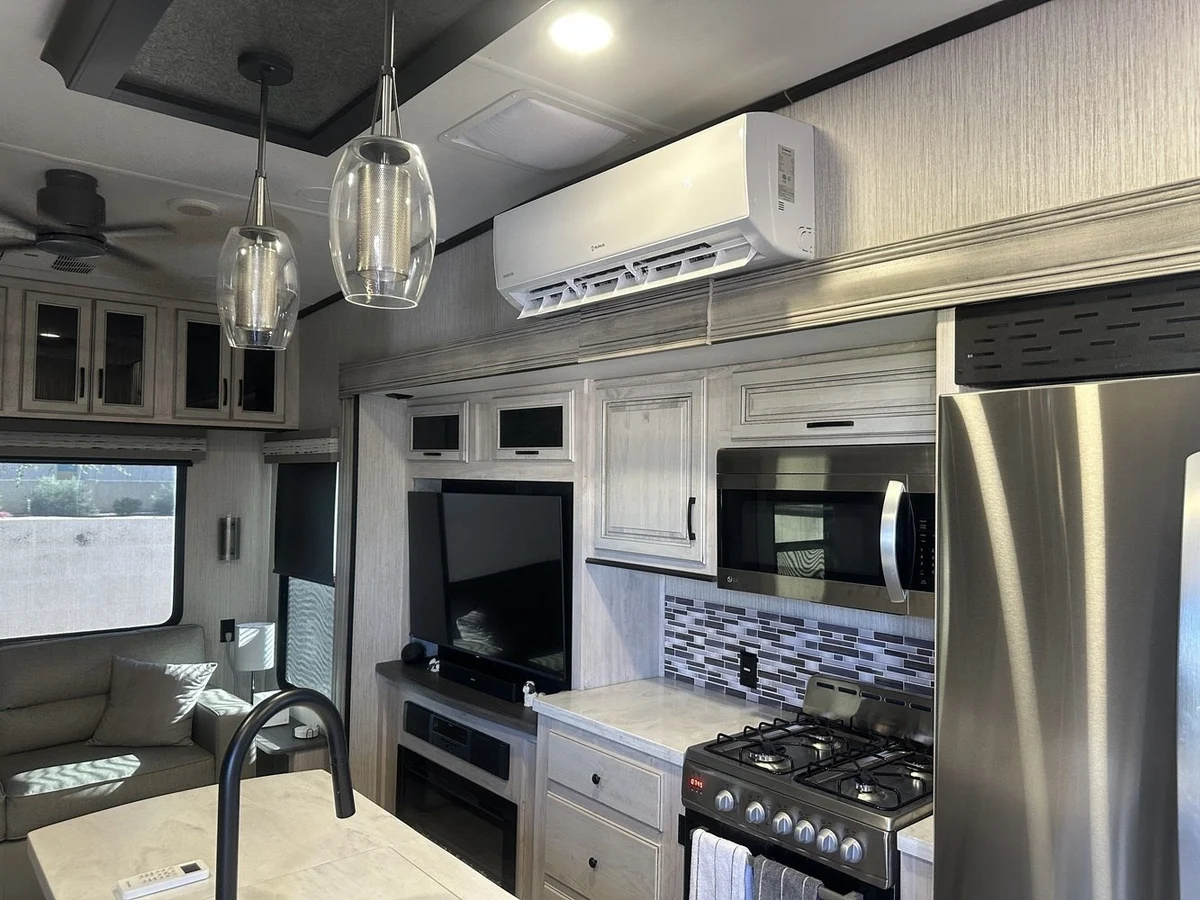
Most ductless mini splits are heat pumps. They cool in summer and heat in winter from the same wall mounted head, which is why they are such a good answer for a garage, a casita, an addition, or a room the ducts never reached. If part of your home is the problem rather than the whole house, a mini split installation may make more sense than resizing the central system.
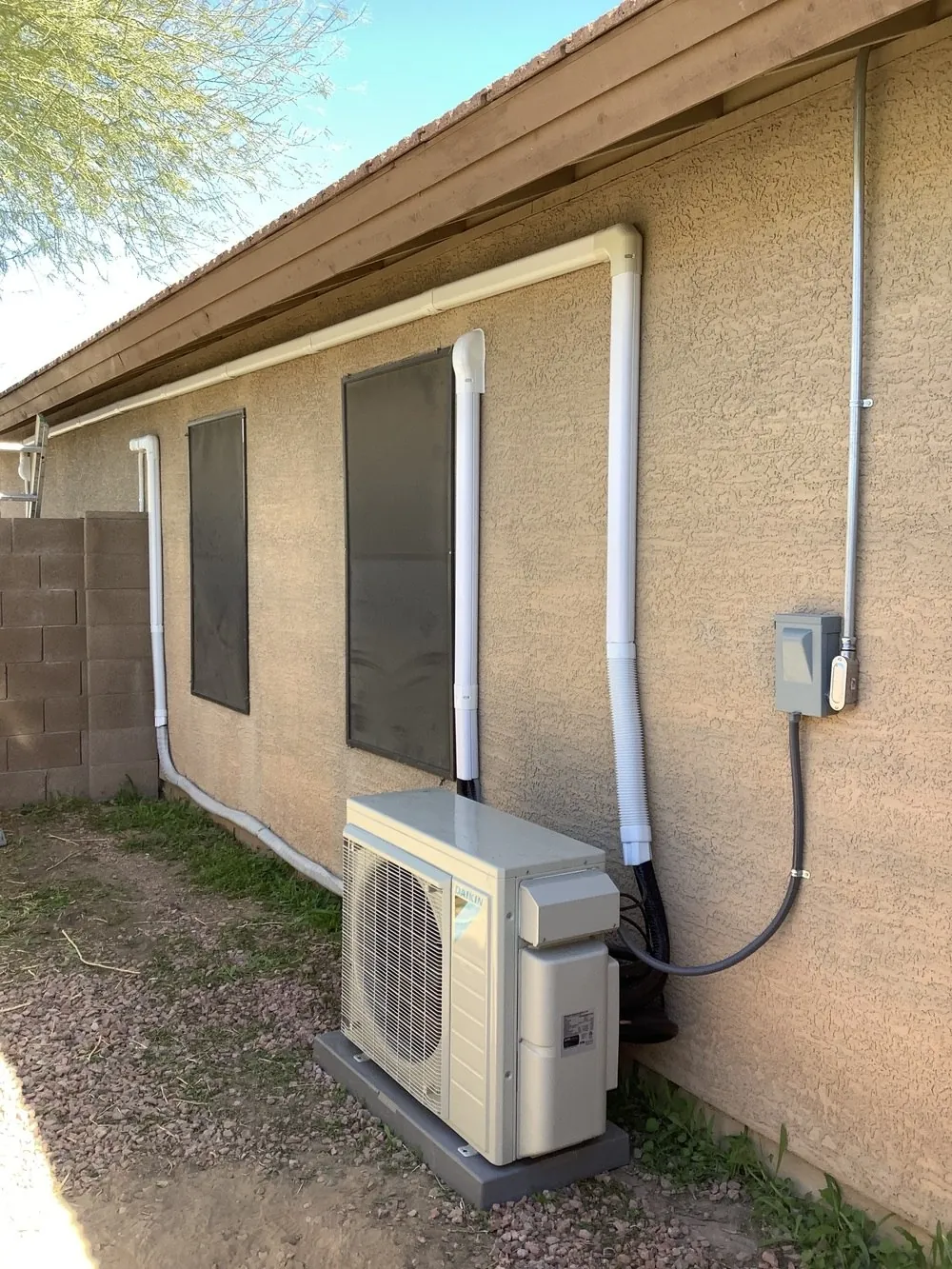
“We installed 2 units mini split with Jbee cooling. They were on time, fast, and very professional.”
Chai S., 5-star Google review
What to Check Before Choosing a Heat Pump
- Your electrical panel. A heat pump, especially one replacing a gas furnace, adds electric load to the house. Some homes, particularly older homes or homes that have already added an EV charger, a pool pump or a spa, are close to the limit. A licensed electrician should confirm the panel has the capacity and the breaker space before install day, not during it. If it does not, a panel upgrade becomes part of the project. Jbee Industries handles both the HVAC and the electrical side, which keeps that from turning into two contractors pointing at each other.
- Ductwork and insulation. Any new system performs only as well as the ducts and the attic let it. Leaky ducts and thin insulation waste capacity in both seasons.
- Your existing furnace. If it is old, unreliable or already due for replacement, a heat pump that replaces both pieces at once is cleaner. If it is newer, keep it and consider AC only or dual fuel.
- Rebates. Heat pumps are frequently the centerpiece of efficiency incentive programs. Check our rebates page for what is currently listed, and expect programs and amounts to change.
- Sizing. A heat pump has to be sized for your cooling load, which in Arizona is the bigger number. An honest load calculation beats any rule of thumb.

So Which One Should You Pick?
If you have no gas, choose a heat pump. If you have gas and a furnace near the end of its life, a heat pump or a dual fuel system is worth a serious look. If you have gas and a furnace with plenty of life left, replacing the AC alone is reasonable, and our AC installation page covers what that involves. Whichever way you lean, installation quality and sizing matter more than the category. The heating side deserves the same attention as the cooling side, which is what our heating repair team looks at when a system is not keeping up on a cold night.
Frequently asked questions
Is a heat pump better than an air conditioner in Arizona?
For cooling they perform the same. The heat pump’s advantage is efficient winter heating without a gas furnace, which suits the East Valley’s mild winters well. Whether it is better for your home depends on gas availability, your existing furnace, and your electrical panel.
Do heat pumps work in extreme heat?
Yes. In cooling mode a heat pump operates exactly like a central air conditioner, and properly sized units are installed across the Phoenix area. Sizing and installation quality matter far more than the system type.
Can I replace my AC with a heat pump and keep my furnace?
Yes. That setup is called dual fuel. The heat pump handles cooling and mild weather heating, and the furnace takes over on the coldest nights. It requires a compatible control setup, so have a tech confirm your equipment pairs properly.
Will a heat pump need an electrical panel upgrade?
Sometimes. It depends on your panel’s capacity, the available breaker space, and what else the home is already running. A licensed electrician can evaluate the panel before the install so there are no surprises.
Talk to Jbee Industries About Heat Pumps
Jbee Industries is a licensed, family owned HVAC and electrical contractor based in Mesa, serving Gilbert, Chandler, Tempe, Queen Creek, San Tan Valley and the rest of the East Valley. Call or text (480) 618-6969 or contact us online. We will look at your home, your equipment and your panel, and tell you straight which option makes sense.
What JBEE customers say
Jorge is the gold standard of craftsman. He’s honest, fair, and personable, with deep expertise in HVAC, solar, and energy storage systems. He installed a 5-ton heat pump on my roof three years ago as part of a solar installation by T&K Electric, which I just hired him again to install a soft starter on, so that my new EcoFlow DPU X battery system would hopefully start it, since it wouldn’t before. He took the time to explain to me how the soft starter worked and waited for me to test if my battery system could start it - it did. I’m hiring Jorge again soon to connect my solar system to my battery system since he also took the time to walk me through how that would work based on the specs of each. I’m not planning to hire anyone for anything again without first running it by Jorge
Ive had Jorge JBEE Industries install 2 splits and one main Bosch AC unit in past 2 years and have recommended him to 3 others... ALL of us would use him again in a second. 1000$ satisfied. Thank you Jorge, yiu are the AC man
Get a free estimate today
Call or text JBEE Industries, or send the form and we will get back to you.
Call (480) 618-6969
One Response